An AI search bar that can sell
A search bar matches words. To sell, it has to do what a good salesperson does.
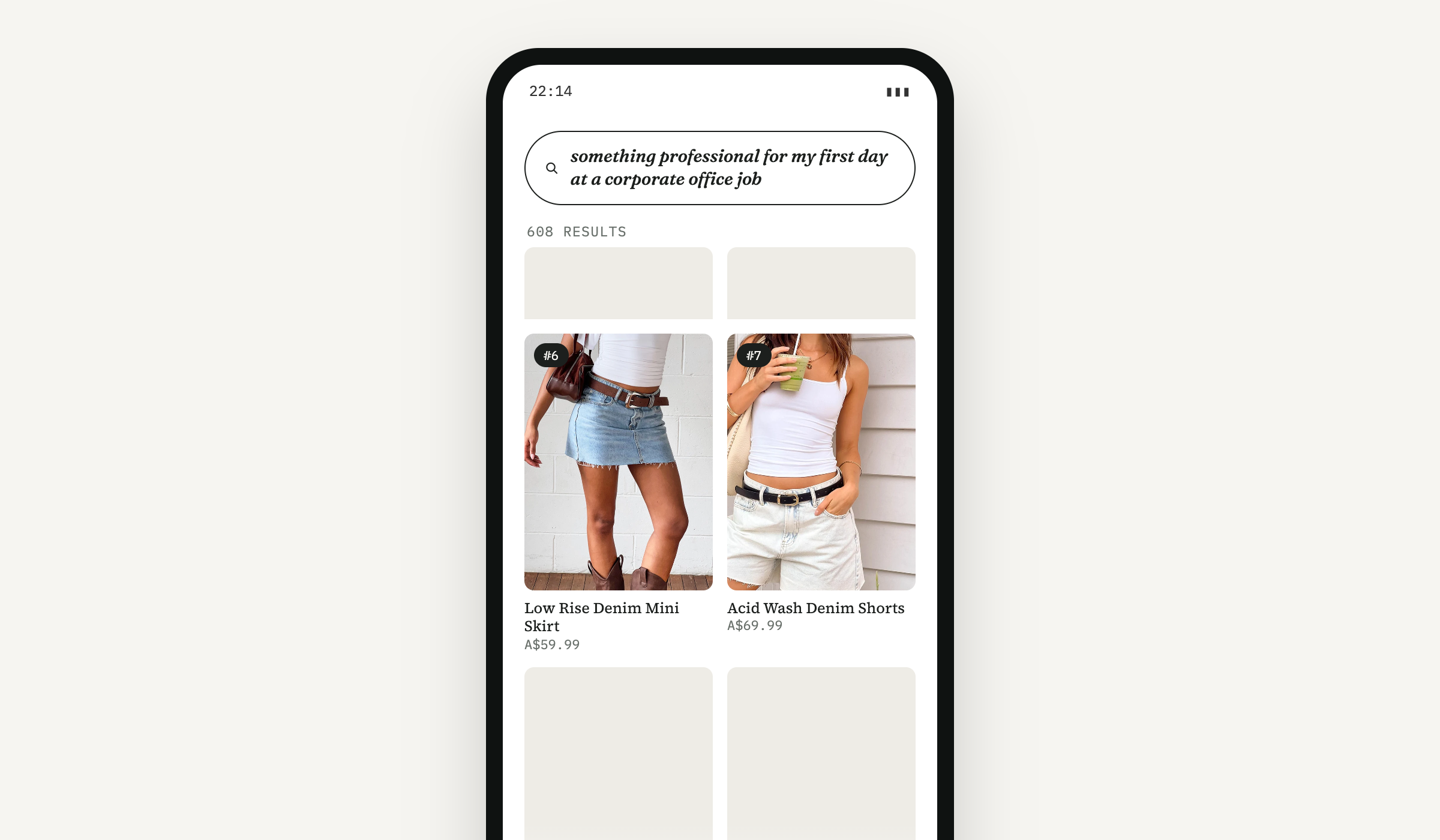
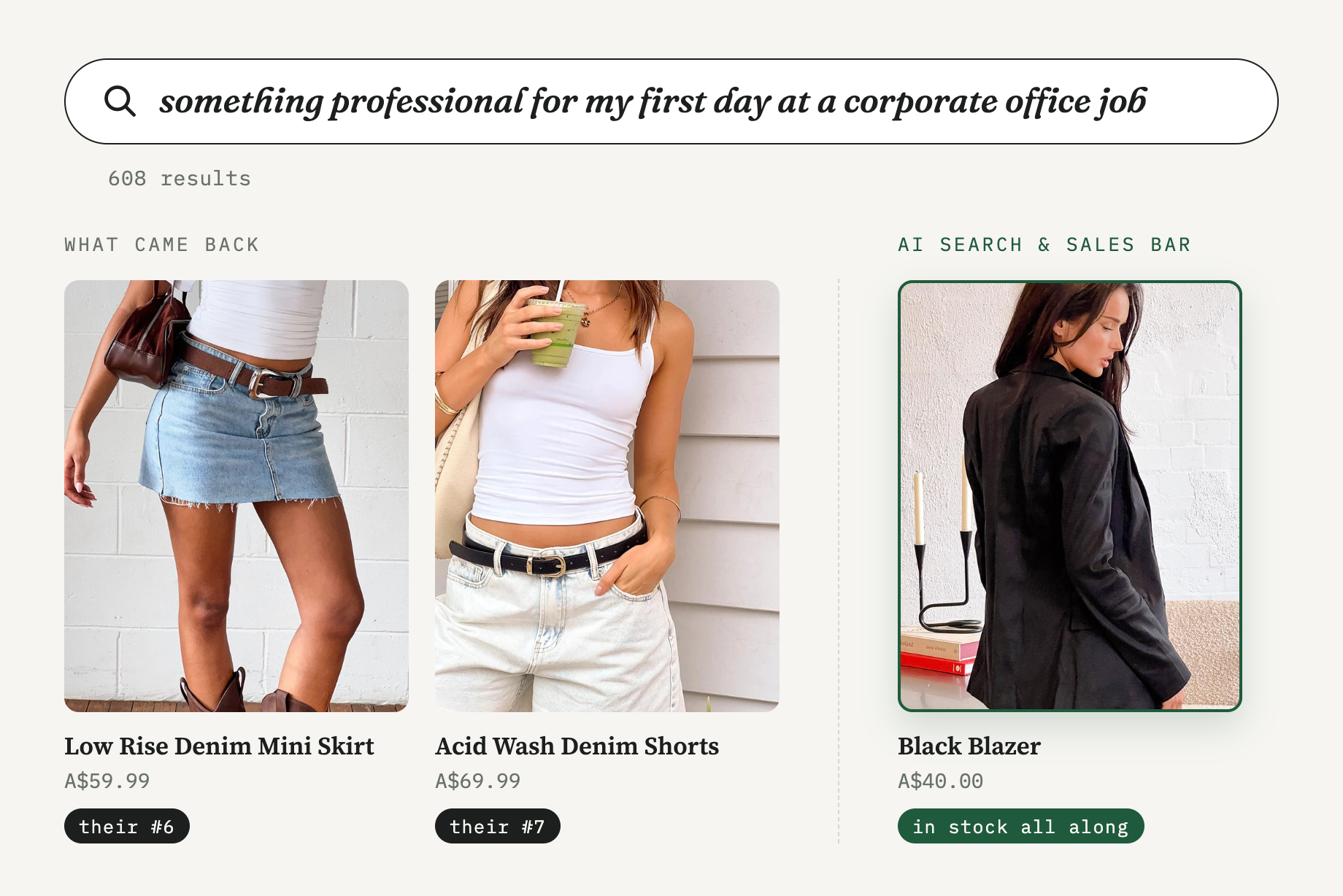
It is Sunday night, a little after ten. Tomorrow is Maya’s first day at a corporate office job. The outfit she planned is on the chair and she has stopped believing in it. Laptop on the duvet, phone face down so she will not check the time, she opens a fashion store she likes and types exactly what she is thinking: “something professional for my first day at a corporate office job.”
The store answers with 608 items. She scrolls. A fur-trim cardigan. A satin mini. Number seven is a pair of acid-wash denim shorts.
Somewhere in the warehouse a black blazer hangs in stock at forty dollars, and it will not appear on any search result presented to her tonight.
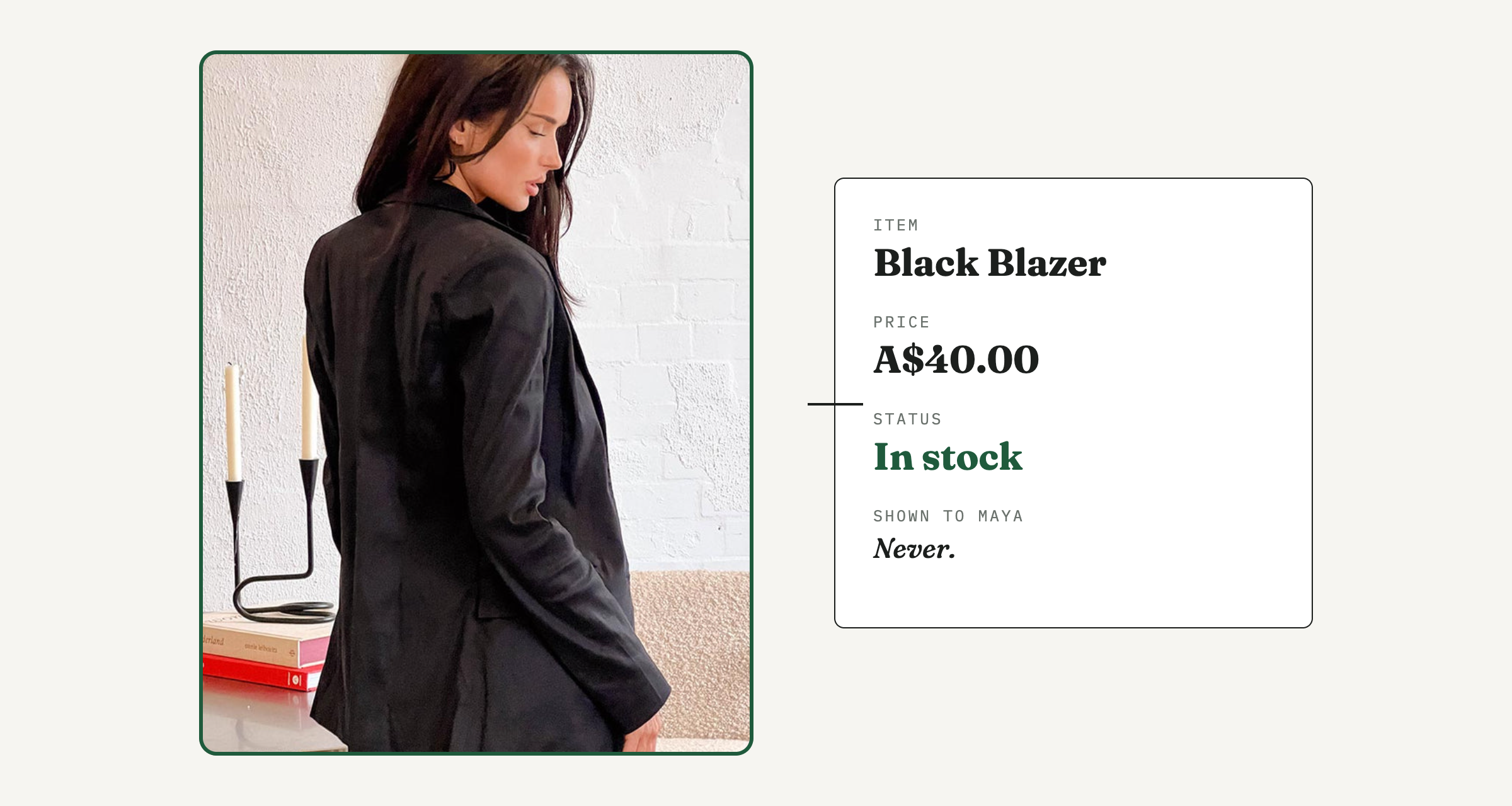
The store did nothing wrong. It matched her words. Maya closes the tab, puts the phone back face down, and wears the outfit on the chair. Nobody at the store will ever know she was there.
Now picture her walking into a shop instead, Saturday afternoon, bag on her shoulder. “I start at an office on Monday. Something professional, not too expensive.” The woman behind the counter looks at her for a second, says “black or navy?”, and walks to a rail at the back. Four minutes later she is holding the blazer against herself in the mirror. She never said the word blazer.
That is the difference between a search bar and a salesperson. A search bar matches. A salesperson listens, knows the shelves, and hands you the thing.
Ask a fashion store’s search bar for a warm winter hat and it offers mini shorts. Ask a gift shop for a present for someone who owns every coffee gadget and it offers three coffee gadgets and a gift card. Ask a flower shop for a gift for your wife and it offers a suitcase.
Every shop on the internet has a version of Sunday night, and AI has not fixed it, because most “AI search” still matches, only with better synonyms. This issue is about what it would take for a search bar to sell. The short answer is the person behind the counter.
What “sells” means
That person can be anyone behind a counter. Take a florist. The shop is cold, because flowers like it cold, and it smells of cut stems and wet paper. Buckets on the floor, a radio somewhere, a roll of brown paper on the counter with a pair of secateurs on top. A man walks in on a Tuesday at six, still in his coat. “It’s my wife’s birthday, she likes pink, nothing too big.”
She hears more than he said. She hears the budget he never mentioned, and she hears that “nothing too big” means he is taking it home on the metro at rush hour with one hand free.
She knows her shelves the way the person who stocked them knows them. The peonies by the window are romantic and photograph well, which matters, because the photograph is half the gift. The lilies at the back are for sympathy. Never a birthday. The tall arrangement by the door is the most beautiful thing in the shop and will be a wreck by the third stop.
So she pulls three things, not thirty, and stands them in a row on the counter. She holds up the one she would buy herself, turns it once so he can see the back, and waits. If nothing in the shop fits, she says so. She has said it before and the shop is still open.
She also remembers. What sold last week, what sat there, what wilted in the bucket on Thursday and went out with the stems.
He leaves with the peonies. That is what “sells” means: the person who walked in with a half-formed want walks out with the thing, and comes back. Every step she took to get him there is a step a search bar could take and does not. The woman at the boutique did the same four things for Maya. Ask any shop owner for a search bar that sells and this is what they are asking for. The job is to build the salesperson.
The problem is everywhere
Flower shops are not special. We spent a summer typing what shoppers type into the search bars of forty-odd well-run online stores. The stores are real. Their names are left off. Start with the simplest case, three ordinary words for a product the shop stocks in three versions:
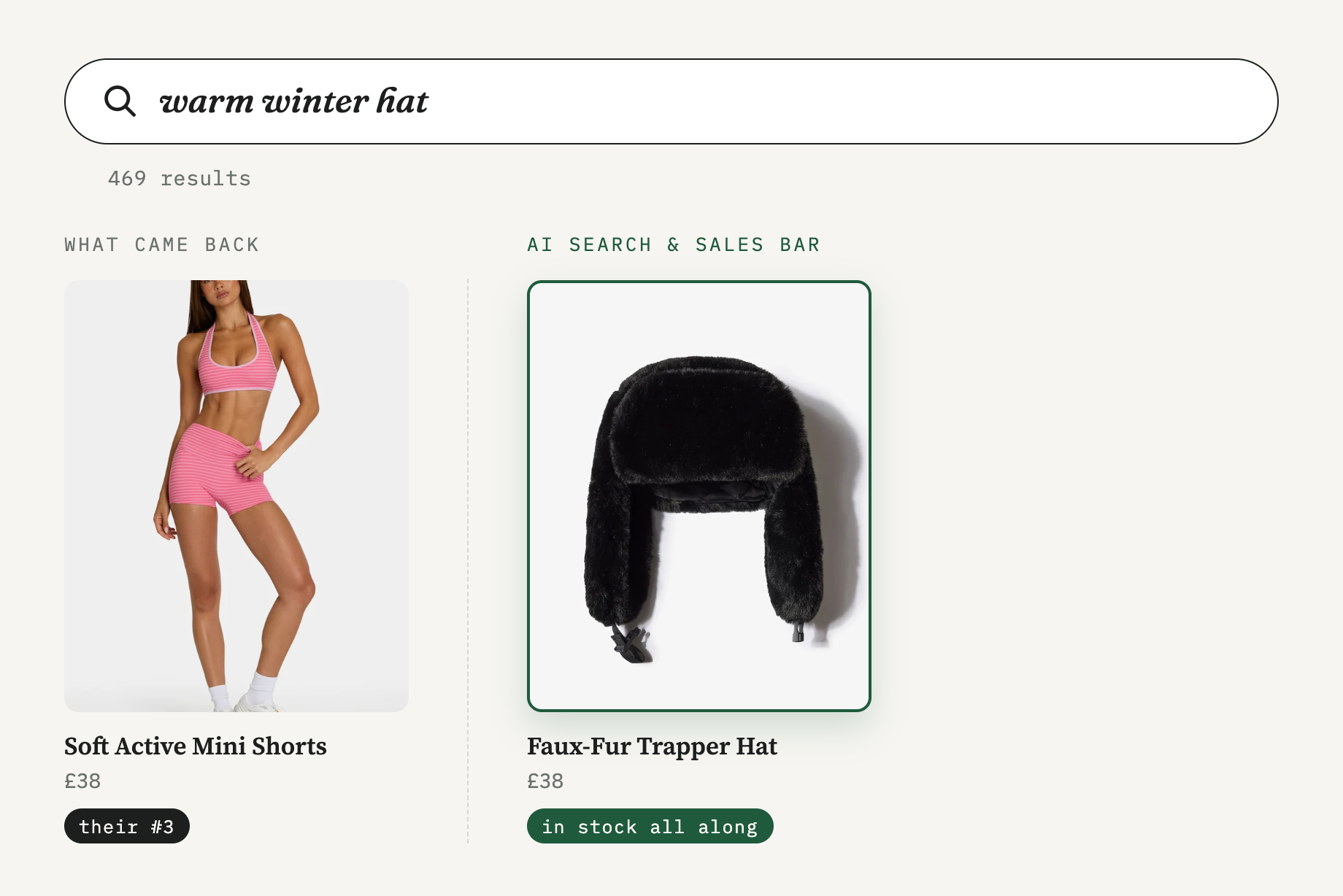
At one store, twelve of fourteen sentences got “no results” while five of five plain keywords worked perfectly. The keywords are fine. The sentences are not. And sentences are how people buy. Sort the sentences that fail and five kinds keep coming back.
Slang. “Balletcore flats” is a thing people type, with a card in hand. The shop had them.
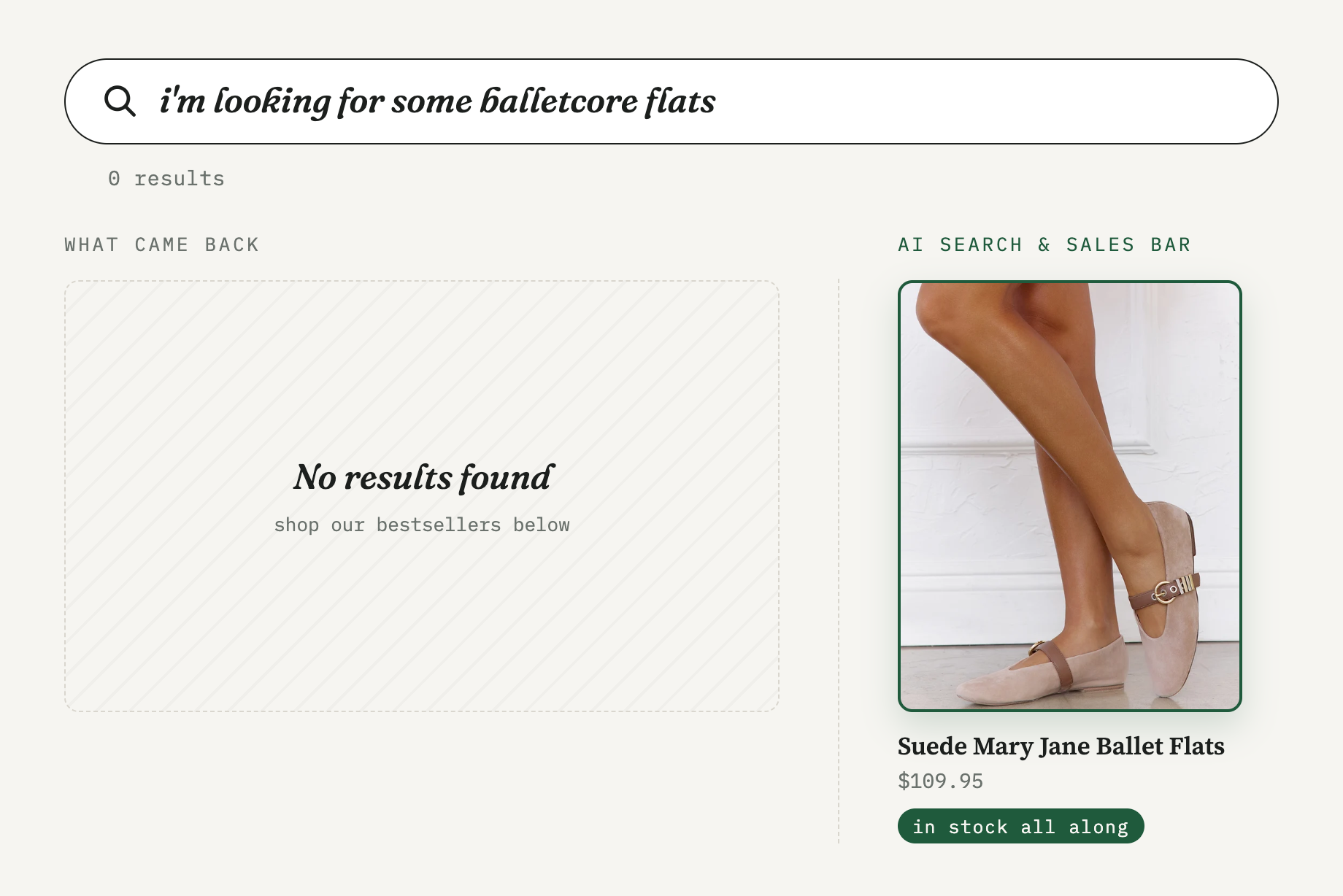
Occasions. Maya’s Sunday night was one.
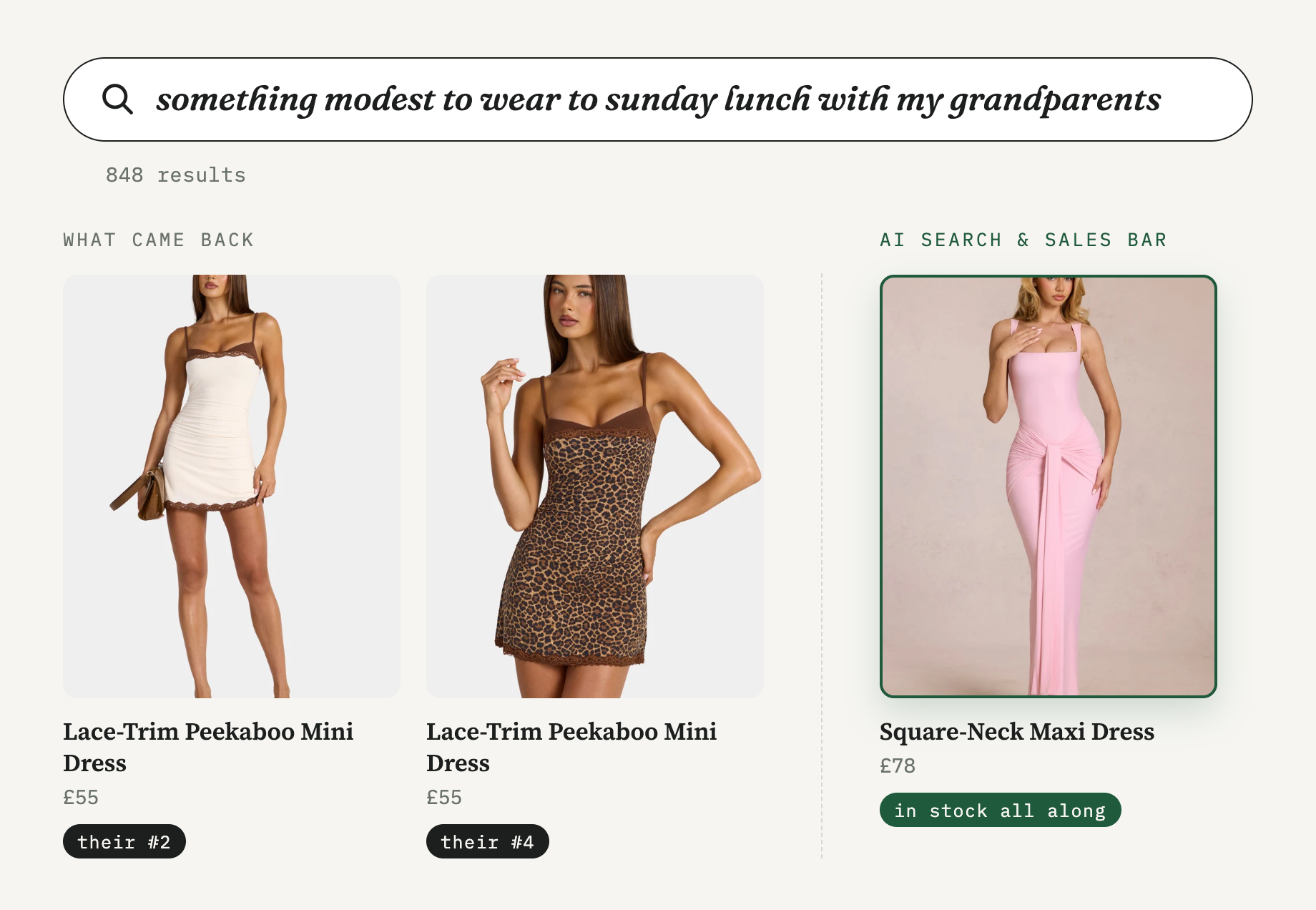
Negatives. To a keyword search, “not” is just another word you seem enthusiastic about.
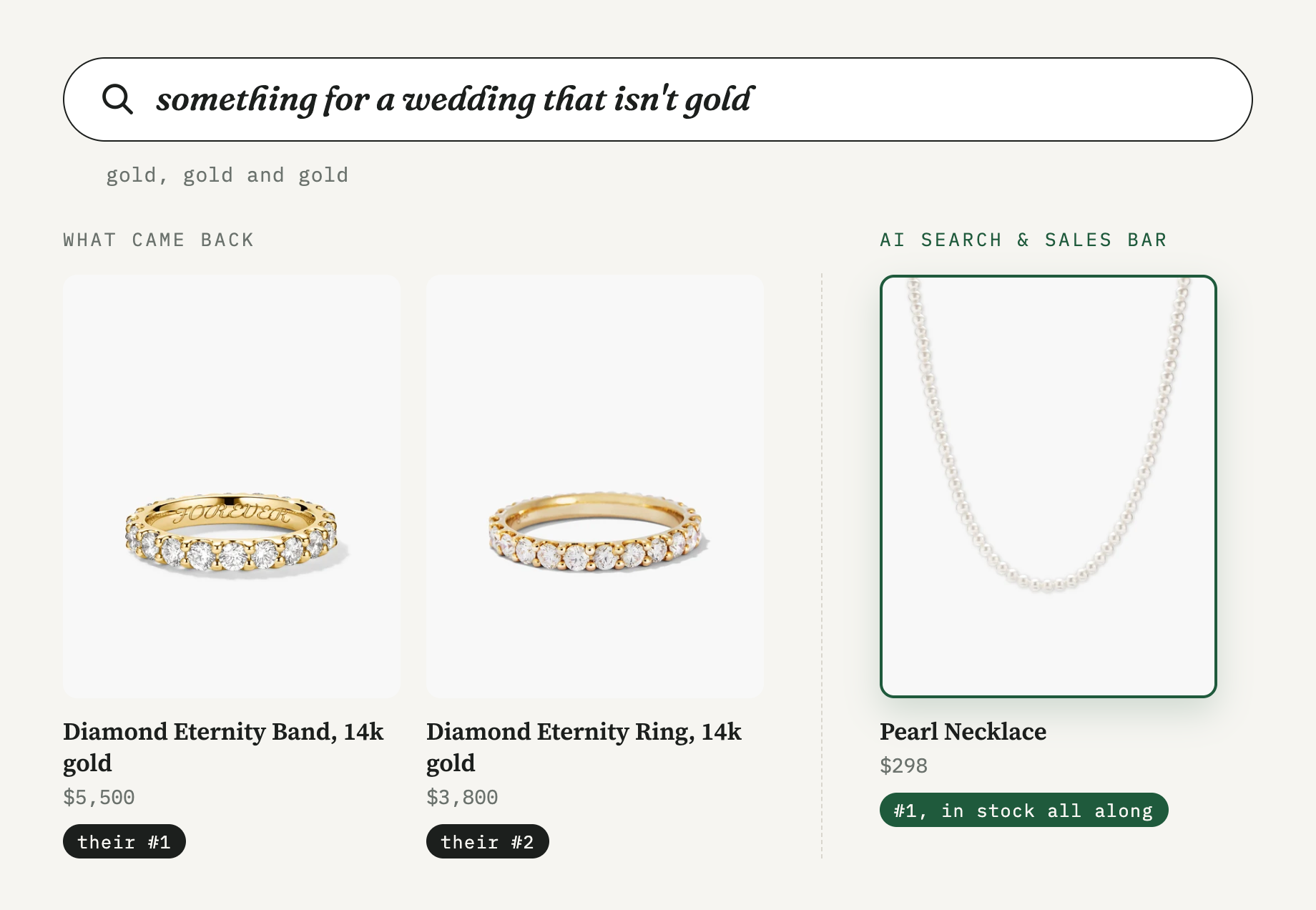
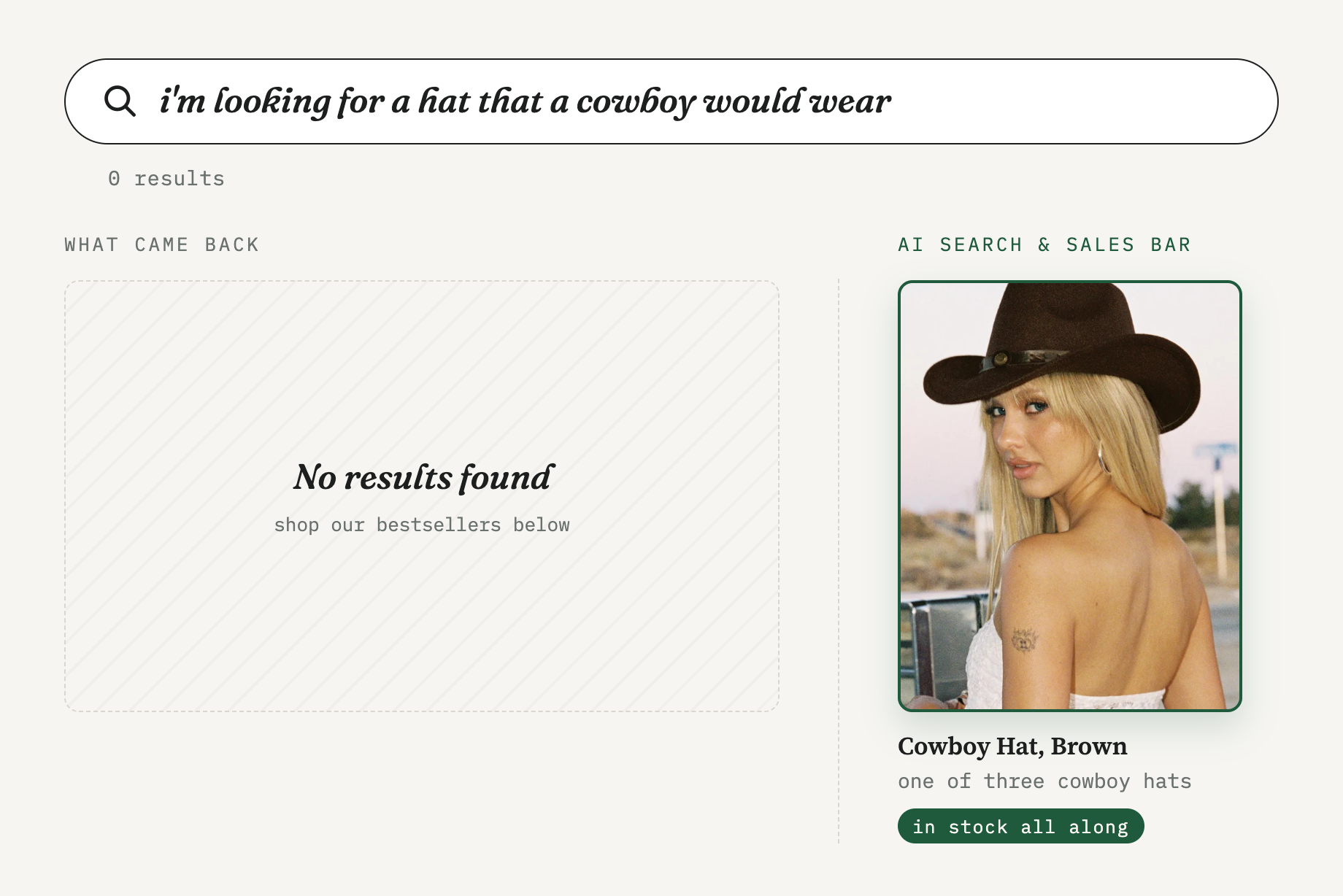
Describing it instead of naming it. Shoppers describe. Product titles name. A keyword search needs every word to match something before a single product comes back.
Gifts described by the person. A shopper asked a coffee brand for a present for someone who already owns every coffee gadget there is.
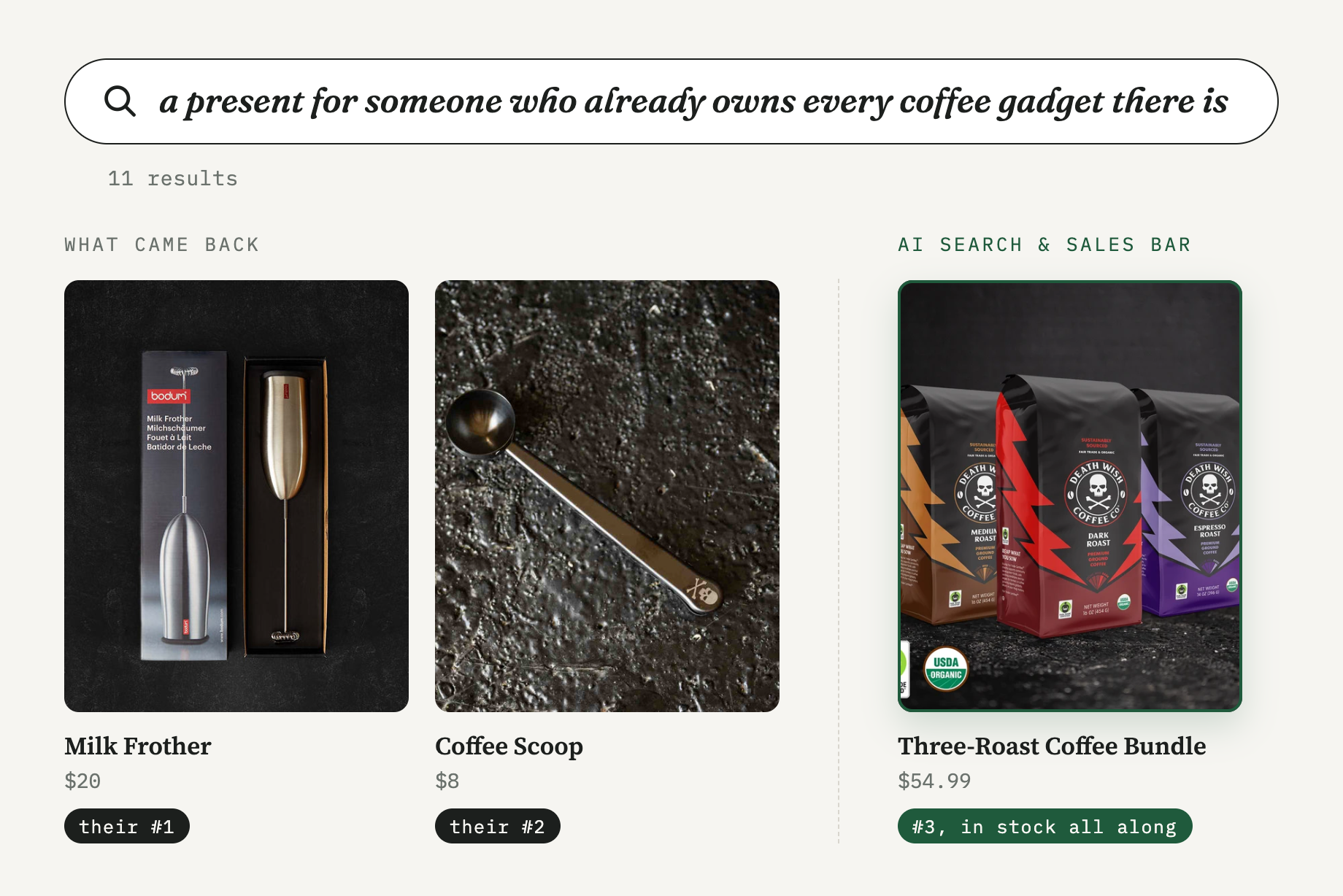
None of these search bars is broken. Each found products whose words match your words. But “balletcore”, “first day at the office”, “isn’t gold”, “a hat a cowboy would wear” and “already owns” are not products. They are people telling you what they want, and the shop had the answer in stock every time. Anyone behind a counter would have found it in four minutes.
How you build one
The difference. Old search matches words: your “hat” against a title with “hat” in it. Newer search matches meaning, so “bouquet” and “flowers” land together. That is a real improvement, and still the wrong target, because neither one knows what the person wants. “Gift for my wife” contains no flower, so meaning-matching does what it can and offers the suitcase. It is a gift. Understanding intent means reading the sentence the way a salesperson reads the person in front of her: who it is for, what the occasion is, what the budget is, what must be true. Only a model that reasons can do that. And that is where the trouble starts.
First, she has to know the shelves. The flower shop’s product list was written for a warehouse, not for a florist. “Standard (12 roses)”. “Deluxe (24 roses)”. “Arctic White”. Nothing about who it is for, what it says, what occasion it fits. A human salesperson learns that in a month on the floor. Yours gets a weekend. So the first thing to build is not search. It is a pass that reads every product and writes the card a good salesperson keeps in her head: what it is, who it suits, which occasions, what style, what color, roughly what price band, and one sentence worth saying about it. It sorts the shop into shelves that make sense to a shopper rather than to a spreadsheet, and it works out the questions this shop should ask, because a flower shop asks “who is it for” and a ski shop asks “how good are you”. A few hundred products take minutes. Most teams skip this step, then wonder why their clever search keeps recommending the suitcase.
Then the wall. Shelves ready, the obvious version is to hand the query and the shelves to a capable model and ask for the best matches. It works. It understood “anniversary” and “nothing too big” and “around fifty”. It also took twelve seconds. Twelve seconds is not a loading time in e-commerce. It is a goodbye. So you try a fast, small model. It comes back in under a second and recommends the suitcase. Every AI product hits this wall. The brains you want and the speed you need live in different models. You can wait for the next release. Mother’s Day will not.
So you build the salesperson, not the model. Look at the florist again. She does not do one clever thing. She does four small ones in a row, and none is hard on its own. Every good clerk does the same four. So that is how you build one, four steps, each done by the cheapest thing that can do it well:
- She listens. A small, fast model reads what the shopper typed and writes down what it heard: who it is for, the occasion, the budget, anything that must be true. “Gift for my wife, anniversary, under fifty” becomes a short note. The only clever step, and it is clever about one thing.
- She walks to the right shelf. From that note we work out where in the shop to look, in the shop’s own words rather than the shopper’s. The right categories, the right price band.
- She pulls a handful. A plain semantic search fetches a few dozen candidates from those shelves. No reasoning here, and it runs in a blink.
- She holds up the best one. A second small model looks only at those candidates, puts them in order, and is allowed to say “none of these fit”. This is where the suitcase dies.
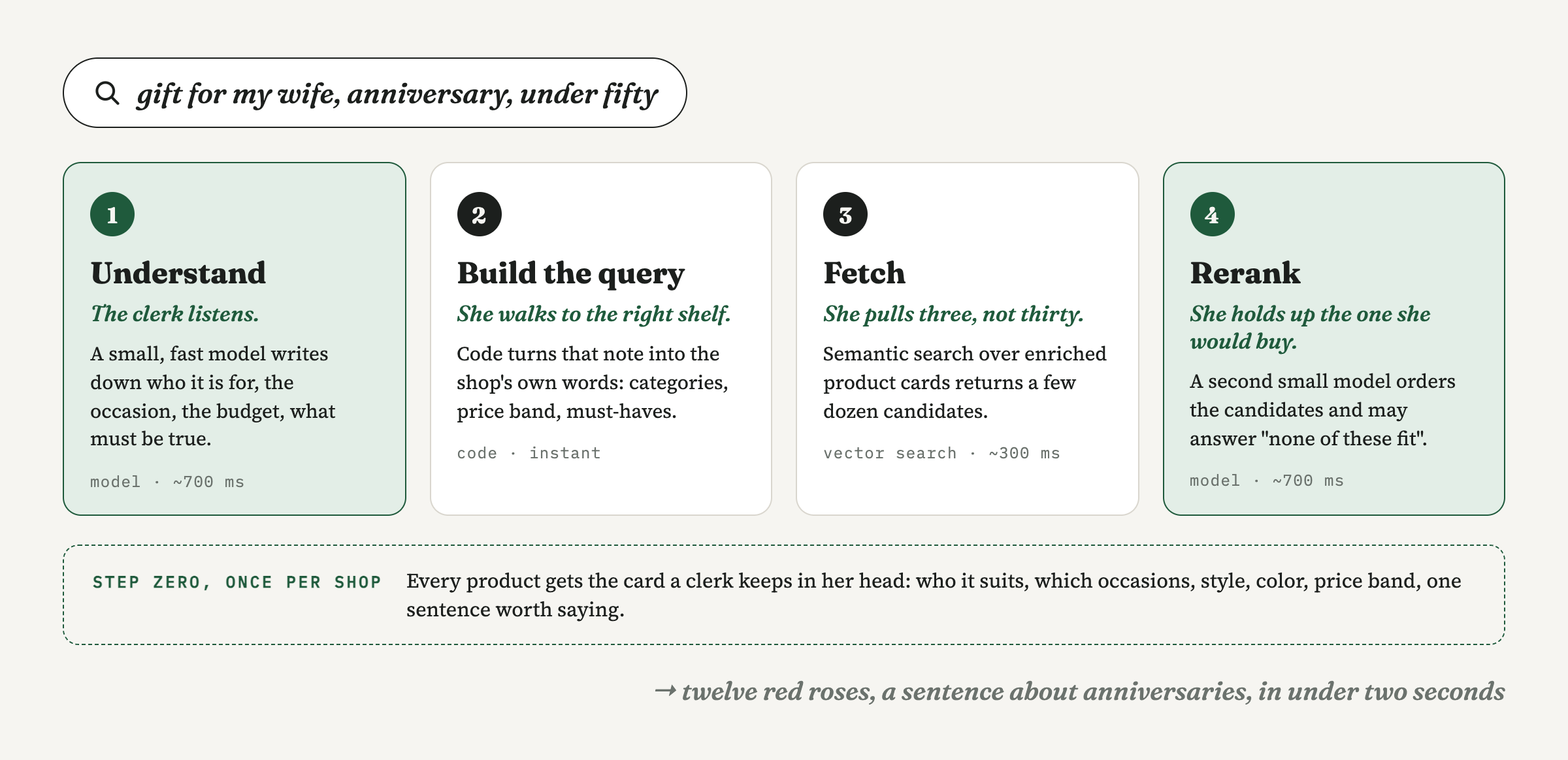
No step can do the whole job. Together they match the smart model at the fast model’s speed.
Then you make her fast. Once the parts exist, the next challenge is getting all four to answer in under two seconds, because a clerk who takes twelve seconds to say “I have just the thing” has already lost the sale. That is a tuning story of its own, with its own tricks, and it gets its own issue.
What it means in practice
For the search. Before any of this, my friend’s shop answered “gift for wife anniversary” with a suitcase, a reed diffuser and a shoulder bag. You can try a florist yourself on our demo flower shop at demo.maestrocommerce.ai. Type “gift for wife anniversary”:
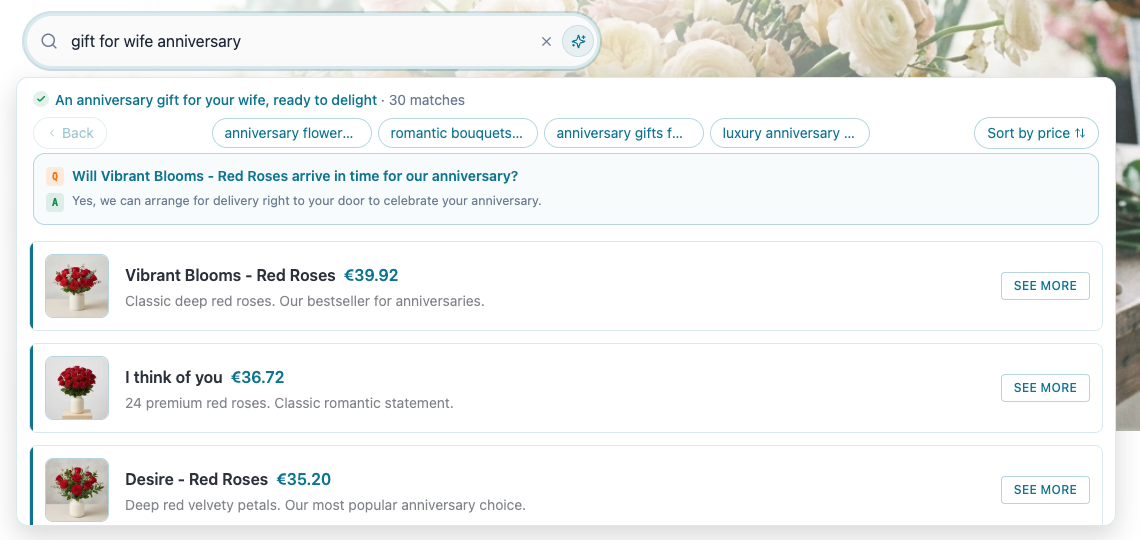
First line: what the florist heard, an anniversary gift for your wife. Then the shelf: thirty matches, red roses first, each with a sentence she would say at the counter. Above the results, the question a shopper asks next (“will it arrive in time?”) answered before they ask it. Under the box, a few suggested searches she wrote for free while reading yours.
Now type “sympathy flowers for a funeral”:
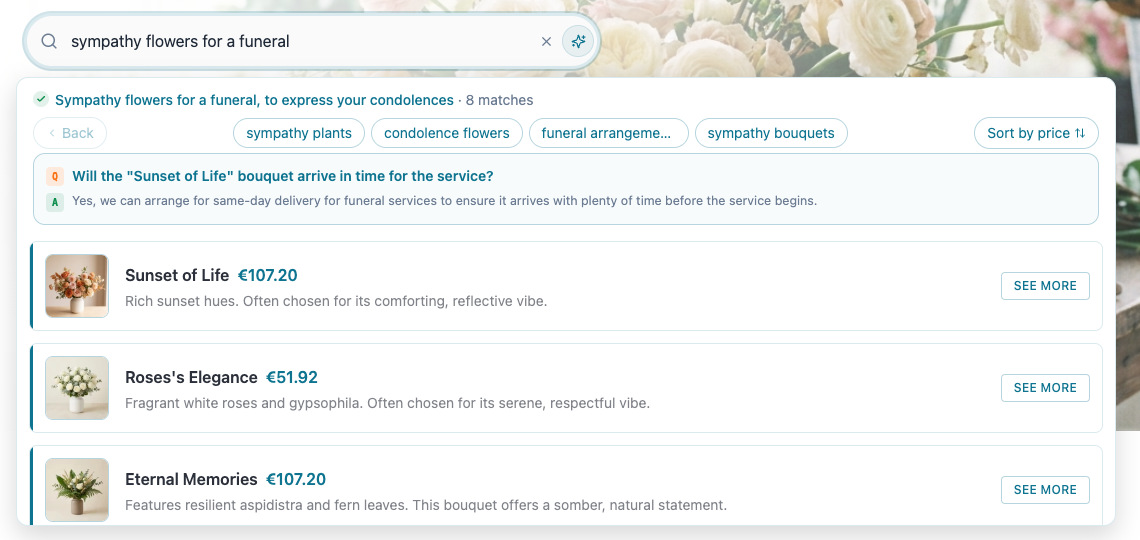
Eight matches, not thirty. White roses, soft colors, nothing red. Same shelves. Same florist. She heard a different person.
For the business. Go back to Maya’s Sunday night. With a salesperson in the search bar, she types her sentence and the first card is the blazer, forty dollars, with a line under it about first days. She buys it. The store knows she came, what she asked for, and what she left with. That last part matters more than the sale: it is how the person behind the counter learns which rail to walk to next time. A search bar that sells is measured in blazers and peonies leaving the building, and in the shoppers who come back because it listened.
The takeaway
AI makes it possible to rethink a tool as ordinary as a search bar around what it is for, selling, instead of what it does, matching. But “rethink” does not mean “hand the query to a model.” The model that understands the shopper is too slow to serve one, and the fast one is too dumb to. The system is the product: find the person who already does the job well, break her work into its small steps, give each step the cheapest thing that does it well, prepare the data she would have in her head before she starts, and keep every step as a knob you can turn. The intelligence is in the arrangement, not in any one part.